
Practical Screen Time Guide
Should you use an app blocker or a softer alternative?
The right choice depends less on the app category and more on your resistance level: do you accept firm limits, bypass them, or still need real access?
Last updated:
Direct answer
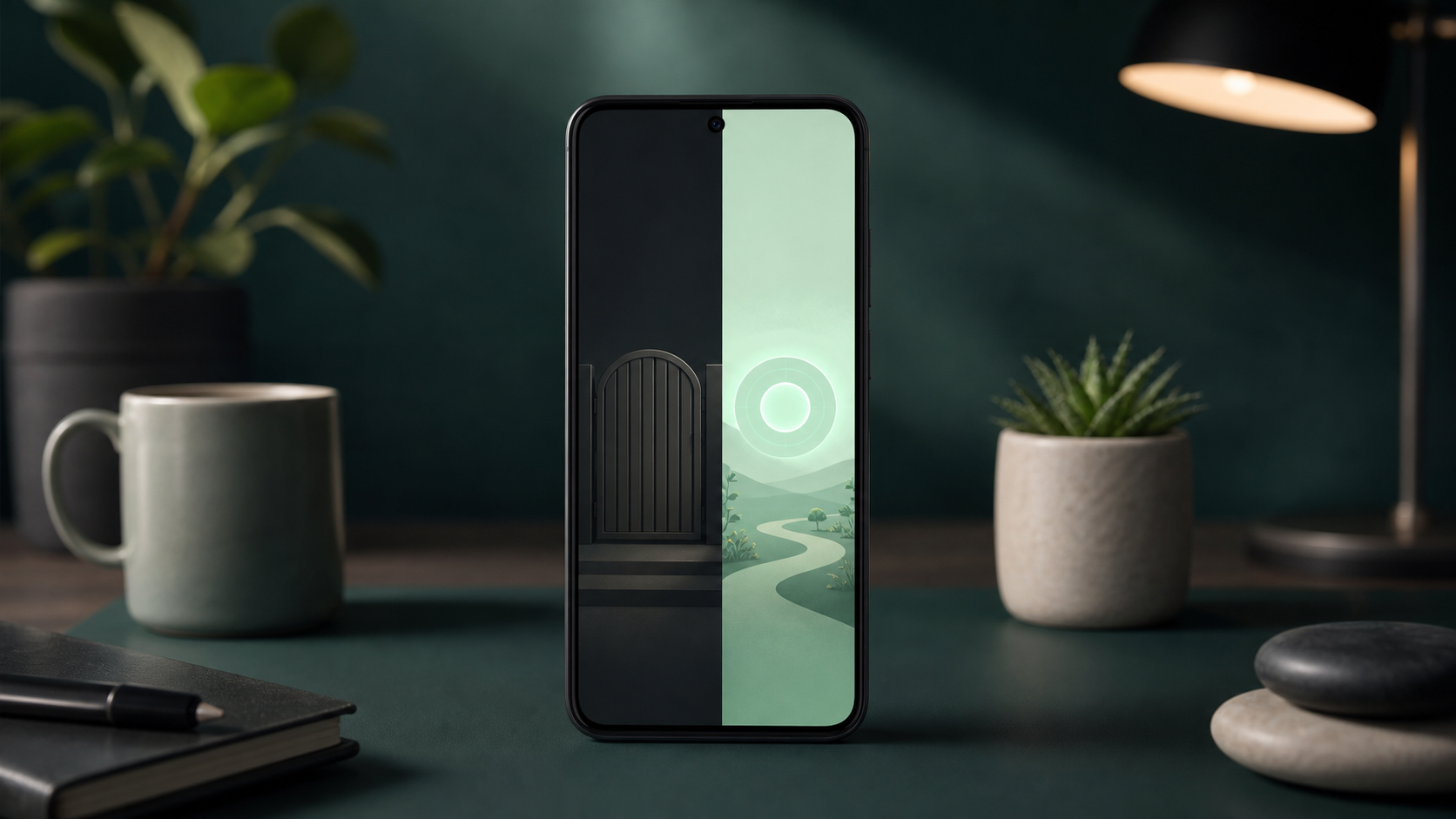
Use a hard app blocker when the goal is real no-access time, the app has little legitimate use, and you are willing to accept the rule. Use a softer smart-friction tool when you keep bypassing blockers, need occasional legitimate access, or want to build awareness, purpose, time planning, and stopping points instead of an all-or-nothing rule. If phone use feels unmanageable or is connected to serious distress, a tool can only help to some extent; the root cause also needs attention.
Simple decision rule
- Choose a blocker for no-access windows where the answer should simply be no.
- Choose softer friction when strict blocks trigger resistance, workarounds, or quick disabling.
- Combine both when real life needs strict protection at some times and realistic access at others.
Match the tool to your resistance level
The same person may need different tools for different apps or times of day. Start with how you react when a limit appears.
Your reaction
Better fit
Main tradeoff
Your reaction
I accept firm limits
Better fit
A hard blocker, Focus Mode, or app timer during study, work, sleep, or family time.
Main tradeoff
Limited flexibility when one legitimate task appears.
Your reaction
I bypass strict limits
Better fit
A softer friction tool that interrupts the habit without turning every use into a fight.
Main tradeoff
Requires willingness to engage with the pause, purpose, or stopping point.
Your reaction
I need one real task
Better fit
Urgent-access rules, purpose prompts, time plans, and reminders to leave after the task.
Main tradeoff
Less complete separation than a full block.
Start with your reaction to being blocked
A stronger tool is not automatically a better tool. The best tool is the one that matches the problem and the amount of structure you can honestly accept.
If a strict rule helps you feel protected, blocking can work well. If a strict rule makes you angry, anxious, or likely to disable the app, the problem may be the fit between the tool and your resistance level.
Choose a hard blocker when the answer should be no
A hard blocker is often best when the app is mostly optional, the goal is full separation, and you do not need regular exceptions.
Examples include study sessions, deep work, family time, or a late-night window where the safest answer is simply no access.
Choose a softer alternative when blocking creates a fight
A softer tool is often better when the app has both useful and distracting uses, or when you keep overriding strict rules.
Instead of fighting every use, smart friction changes the entry and exit moments: pause before opening, name the purpose, plan the time, and add stopping points before the session runs away.
Use a hybrid setup for real life
Many people do not need one tool for everything. A realistic setup can use hard blocking for sleep or deep work, and softer friction for apps that still need occasional access.
For example, you might block short-video apps after midnight, but use friction during the day so one legitimate check does not become a long session.
Where smart friction fits
A tool in the softer smart-friction category is designed to fight addictive app design by adding back choice points that many apps remove.
LoopCut is one example: it can help with automatic opening, loss of purpose, missing stopping points, and short checks that become long sessions. It includes a hard-blocking boundary for bedtime through Sleep Guard, but the broader value is helping the user notice, decide, plan, and stop.
When neither tool is enough
If scrolling is mainly driven by loneliness, exhaustion, anxiety, low mood, or a life situation that feels unbearable, any app can only help to a limited extent.
In that case, a blocker or friction tool may still reduce the easiest path into scrolling, but the more important work is addressing the root cause: sleep, social connection, workload, stress, or professional support when needed.
FAQ
Why do I keep bypassing app blockers?+
Often because the blocker does not match your real need. You may still need legitimate access, the rule may feel too rigid, or the habit may be strong enough that a hard wall triggers resistance instead of reflection.
Is a softer tool weaker than an app blocker?+
It is less absolute, but not necessarily weaker. A softer tool can be more sustainable when the real problem is automatic use, lost purpose, or bypassing strict rules.
Can LoopCut replace a hard blocker?+
Sometimes, but not always. LoopCut is a good fit when you need access with more conscious choice. A hard blocker may still be better for apps or time windows where access should be unavailable.